Courses at Bowdoin College
Prove It!: The Power of Data to Address Questions You Care About
Biology/ ENVS 1060
Meets INS/ MCSR distribution requirements
Course Description
Climate change, biodiversity loss, pollution, and other environmental issues present significant threats to ecological integrity, human health, and social justice. An overwhelming amount of information exists on these topics, from a variety of perspectives—some reliable, some not. Strategies are required for processing this information and drawing conclusions. Students develop skills in accessing reliable information, data analysis, and interpretation, as well as science communication.
Introduction to Environmental Studies: Interdisciplinary Approaches
ENVS 1101
Required course for Environmental Studies coordinate majors and minors
Course Description
An interdisciplinary introduction to the environment framed by perspectives from the natural sciences, social sciences, and arts and humanities. Surveys past and present status of scientific knowledge about major global and regional problems, explores both successes and inadequacies of environmental ideas to address specific crises, and assesses potential responses of governments, corporations, and individuals. Topics include food and agriculture, pollution, fisheries, and climate change and energy. Other subjects include biodiversity, population, urbanization, consumption, environmental justice, human and ecological health, and sustainability.
Perspectives in Environmental Science
ENVS 2201/ BIOL 1158/ CHEM 1105
Core course for Environmental Studies coordinate major
Meets INS / MCSR distribution requirements
Course Description
Understanding environmental challenges requires scientific knowledge about the different spheres of the Earth — land, water, air, and life — and how they interact. Presents integrated perspectives across the fields of biology, chemistry, and earth and oceanographic science to examine the scientific basis for environmental change from the molecular to the global level. Foundational principles are developed to address major course themes, including climate change, energy, soil/air/water pollution, chemical exposure and risk, land use change, and biodiversity loss. This remote course will include synchronous and asynchronous work. Laboratory sessions consist of virtual laboratory experiments, group work, case study exercises, data analysis using SPSS and GIS, and discussions of current and classic scientific literature.
Ecology
Biology 2327/ ENVS 2227
Core course for Biology major (IB and EEMB concentrations)
Meets INS distribution requirement
Course Description
Ecology, the study of how organisms interact with each other and their environment, incorporates topics from how organisms cope with environmental stressors to global carbon cycling. Addresses current questions in ecology, from global change to food security to invasive species. Lectures, labs, primary and popular literature emphasize how scientists use the tenets of ecology to address current environmental issues. Labs, discussions and activities focus on practical applications of ecological theory, scientific writing and data analysis on topics such as plant-insect interactions, amphibian decline, river restoration and natural history.
Ecotoxicology: Pollution Impacts on Ecosystems and Human Health
Biology 3309/ ENVS 3930
Upper level elective for Biology major, Senior seminar for ES major
Meets INS distribution requirement
Course Description
Chemical exposure can strongly impact both ecological communities and human health, often in complex and unexpected ways, yet limited data and scientific uncertainty make pollution regulation challenging. Examines pollution impacts on biological systems, from the organism to the ecosystem scale, with a focus on emerging research areas, including evolutionary ecotoxicology and the potential synergy of multiple environmental stressors. Investigates how society might use available toxicological data to protect ecological integrity and human health. Guest visitors explore political, historical, and social justice aspects, providing an interdisciplinary lens. Reading–, writing–, and discussion-focused seminar.
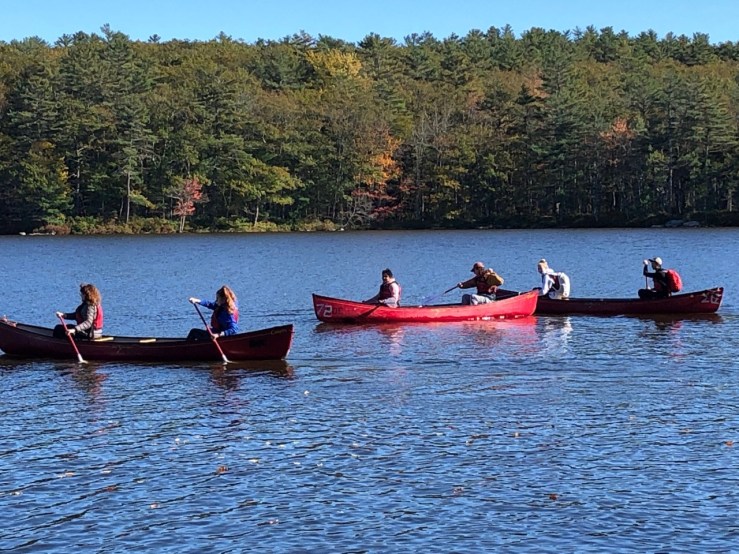
Ecology, Fall 2021
 Mary A. Rogalski, PhD